
25 November 2026
Surveillance Versus GPS Tracking Compared
Surveillance versus GPS tracking: understand the evidence, privacy, consent, and legal limits before choosing an investigative approach for a complex case.
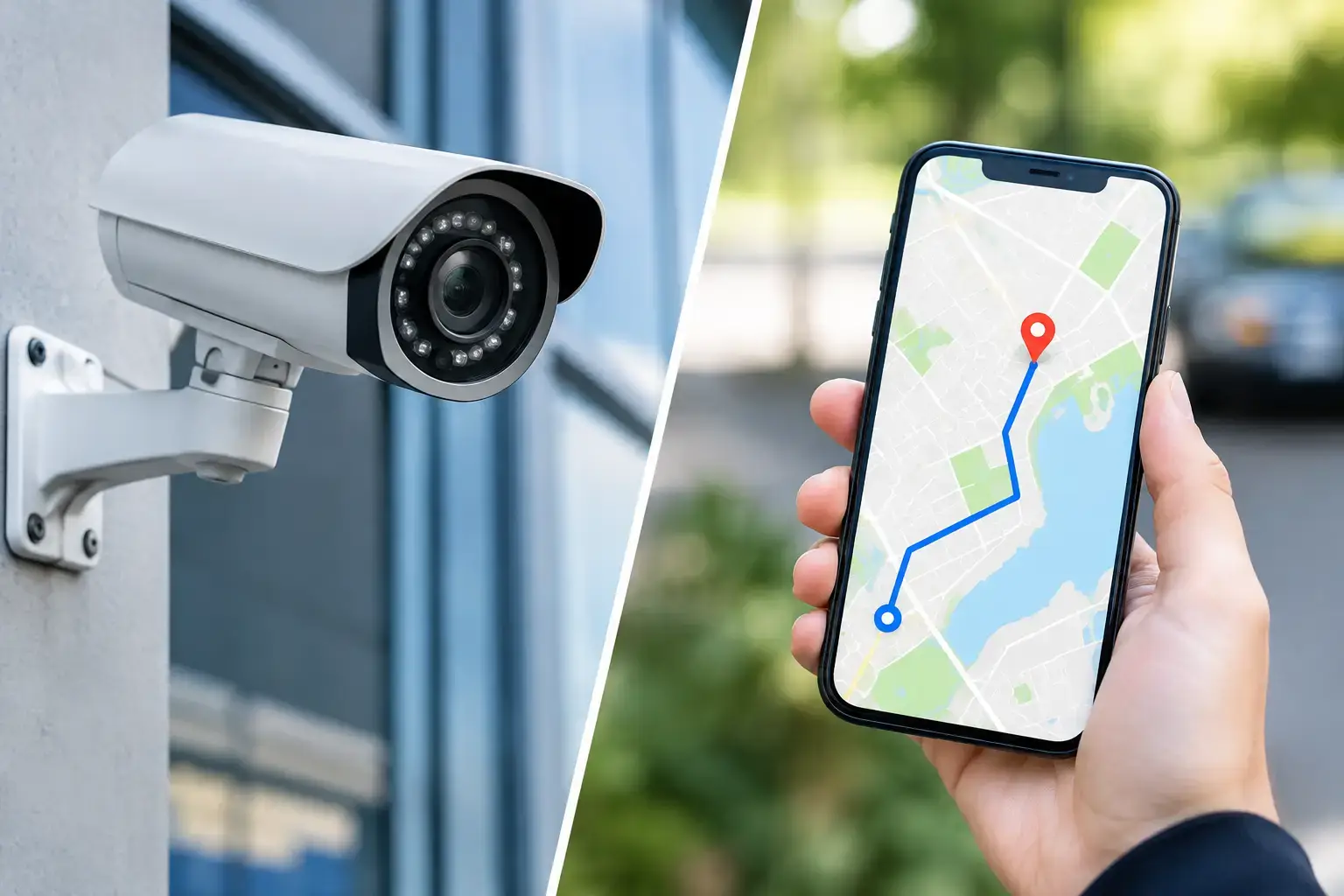
A location pin can show where a vehicle went. It cannot show who was driving, what happened at the destination, or whether the activity was relevant to your concern. That distinction sits at the center of surveillance versus GPS tracking. Both methods can contribute to an investigation, but they answer different questions, carry different privacy considerations, and require careful decisions about legality and evidence.
For an individual dealing with suspected infidelity, a custody concern, or a missing-person matter, the wrong method can produce incomplete answers or create unnecessary legal exposure. For a business examining fraud, misuse of company vehicles, false work injury claims, or employee misconduct, the method must be proportionate to the risk and defensible if findings are later reviewed by management, counsel, or a court.
Surveillance versus GPS tracking: the practical difference
Surveillance is the purposeful observation and documentation of a person, place, vehicle, or activity. A professional investigator may observe movements in public areas, record relevant timestamps, capture photographs or video where appropriate, and document events in a contemporaneous report. Its strength is context. It can help establish what occurred, who was involved, and why a pattern may matter.
GPS tracking uses a location-enabled device or system to record or report the movement of an asset, most commonly a vehicle. Its strength is coverage over time. It may identify repeated routes, lengthy stops, unexplained travel, or a pattern that merits closer examination.
Neither method is automatically better. Surveillance is generally more labor-intensive and may cover a shorter period, but it can verify meaningful activity. GPS data can cover a broader timeline at lower operational intensity, but it does not prove the identity of a driver or the purpose of a visit. In many matters, GPS information may be useful only as a lead, while discreet observation provides the evidence needed to interpret it.
What professional surveillance can establish
Surveillance is often appropriate when the issue involves conduct rather than movement alone. In a matrimonial investigation, for example, a client may need reliable documentation of interactions, meetings, and behavior that goes beyond an address or a time of arrival. In a commercial matter, surveillance can help verify whether an employee is conducting outside work during paid hours, misusing company assets, or engaging in activity inconsistent with a compensation claim.
The value lies in disciplined observation. A properly prepared report should distinguish between facts observed directly and reasonable inferences drawn from those facts. Dates, times, locations, descriptions, supporting images, and continuity of events all matter. This level of detail helps clients make decisions based on evidence rather than assumptions.
Context makes evidence more useful
Consider a company vehicle repeatedly parked near a competitor’s premises after business hours. GPS records may identify the pattern, but they do not establish whether the vehicle was being serviced, attending a legitimate meeting, or used for an improper purpose. Surveillance may clarify the situation by documenting the relevant activity without speculation.
The same principle applies to a personal case. A recurring visit to a residential address may be significant, or it may have an innocent explanation. Professional surveillance is not designed to manufacture a narrative. Its purpose is to document verifiable facts so the client can assess the situation with greater clarity.
What GPS tracking can and cannot prove
GPS tracking is most useful when the central question is geographic movement over time. A business may need to assess whether company-owned vehicles are being used outside authorized hours or whether delivery routes materially differ from operational records. A lawful tracking program can help identify anomalies efficiently, particularly where a fleet or authorized corporate asset is involved.
However, GPS data has limits. A device may show that a vehicle stopped at a location, but it does not necessarily show who entered or exited, whether the vehicle remained there continuously, or what occurred nearby. Signal quality, device placement, battery life, and data transmission can also affect the completeness of the record.
GPS tracking should therefore be treated as one evidential source, not a final conclusion. Where the stakes are high, findings should be corroborated through records, interviews, digital evidence, or targeted surveillance conducted within lawful boundaries.
Consent, ownership, and privacy are not secondary issues
The question is not simply whether a tracking device can be placed on a vehicle or whether a person can be followed. Before any investigative activity begins, the method must be assessed against the specific facts, including asset ownership, authority to monitor, consent, the relationship between the parties, the purpose of the investigation, and the intended use of the findings.
In Singapore, privacy, data protection, harassment, trespass, and other legal considerations can arise depending on the circumstances. Monitoring a company asset under a clearly communicated workplace policy is materially different from covertly placing a device on a vehicle used by another person. A spouse’s suspicions, an employer’s concerns, or a client’s need for answers do not create a blanket right to track or monitor someone.
Professional investigators must also avoid methods that cross legal or ethical boundaries. Surveillance does not authorize trespass, intimidation, access to private premises, or harassment. GPS tracking should never be approached as a shortcut around consent or lawful authority. When a matter has potential legal consequences, clients should obtain legal advice on their specific rights and obligations before acting.
Choosing the right method for the question
The starting point should be the question that needs to be answered, not the technology that appears most convenient. If the concern is whether a company vehicle is being used outside approved hours, a lawful GPS program and vehicle-use policy may be relevant. If the concern is whether a claimant is carrying out physical work inconsistent with stated limitations, surveillance may be more suitable because activity and context are central.
Where there is a concern about an employee, an investigation should also consider fairness and proportionality. Monitoring every movement without a defined purpose can expose a business to unnecessary risk and damage workplace trust. A focused scope, clear objectives, and a documented decision process are more likely to produce useful findings.
For private clients, the emotional pressure to obtain immediate answers can be intense. That is precisely why a measured strategy matters. Unverified screenshots, location-sharing rumors, and confrontational action can complicate a sensitive situation. An investigator should help define what can be lawfully established and whether the anticipated evidence will actually assist with a personal decision, negotiation, or legal process.
From information to court-conscious evidence
Evidence is more valuable when its collection can be explained. A credible investigative file should show how information was obtained, when it was recorded, and how supporting material was preserved. Reports should be factual, organized, and free from exaggerated claims.
For GPS-related information, this may include the source of the data, relevant timestamps, and the basis on which the organization had authority to monitor the asset. For surveillance, it may include observation logs, original images or video, and clear identification of locations and events. The aim is not merely to gather material, but to preserve its reliability if it is challenged.
Baker Street Private Investigator approaches sensitive assignments with this evidential discipline. A tailored case strategy considers the client’s objective, operational risks, confidentiality requirements, and the lawful scope of work before any field activity begins.
When neither method is the answer
Some matters are better addressed through background checks, document review, digital forensics, internal controls, interviews, or legal correspondence. A suspected data leak, for instance, may require examination of access records and devices rather than physical observation. A missing-person case may call for inquiries, records research, and coordinated leads rather than tracking.
A responsible investigator does not recommend surveillance or GPS tracking merely because either tool is available. The appropriate method is the one that can answer a defined question lawfully, discreetly, and with evidence that is useful to the client.
When the facts are sensitive, clarity should come before action. A carefully scoped investigation protects confidentiality, reduces avoidable risk, and gives you a firmer basis for the decisions that follow.