19 August 2026
Are Covert Recordings Legal in Singapore?
Are covert recordings legal Singapore? Learn when private audio or video evidence may be collected, used, or create legal risk in sensitive investigations.
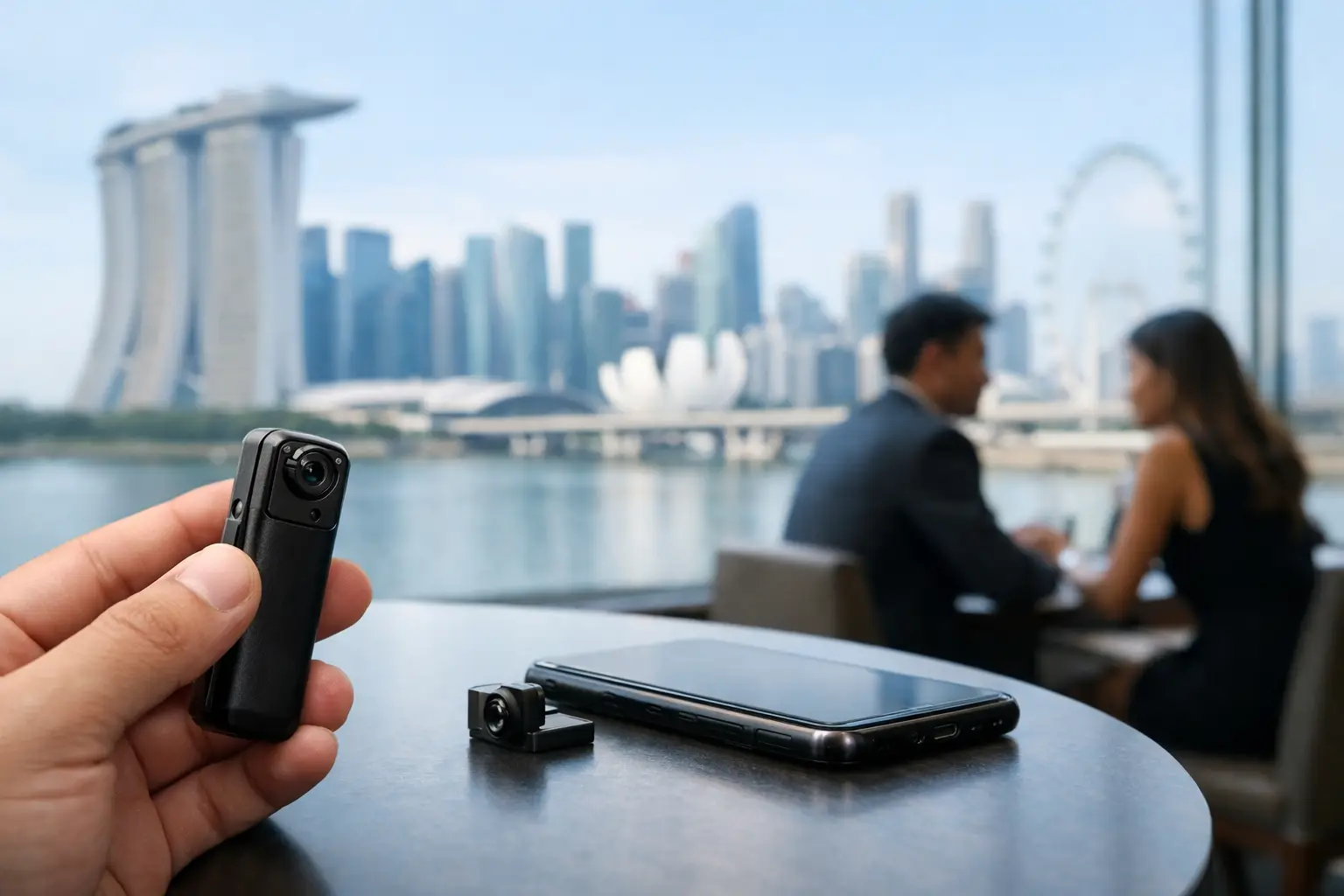
A difficult conversation, suspected employee misconduct, or a custody dispute can create a strong urge to record what is happening. The question “are covert recordings legal singapore” does not have a one-line answer. In many situations, a person may record a conversation they are part of, but the way a recording is obtained, what it captures, and how it is later used can create serious privacy, employment, criminal, or evidential issues.
For clients seeking clarity rather than speculation, the practical rule is this: a recording is not automatically lawful simply because it reveals the truth. Collection must be proportionate, targeted, and compliant with the circumstances.
Are Covert Recordings Legal in Singapore?
Singapore does not have a simple blanket rule that makes every secretly made recording illegal. A person who participates in a conversation will often be in a different legal position from someone who uses a device to intercept, access, or record communications between other people.
That distinction matters. Recording a meeting you attend is not the same as planting a device in a colleague’s office, accessing another person’s phone, logging into a private account, or intercepting calls and messages that were never intended for you. The latter situations may raise far more significant legal concerns.
Whether a covert recording can be used also depends on context. A recording made to preserve evidence of threats, fraud, harassment, or a material admission may have a legitimate purpose. A recording made to embarrass someone, monitor private conduct without justification, pressure an employee, or expose intimate material carries much greater risk.
The safest approach is to assess the objective before any recording begins. Ask what fact needs to be established, whether the information can be obtained by less intrusive means, and whether the proposed method intrudes into a place or communication where privacy is reasonably expected.
The Main Legal Risks Behind Covert Recordings
Recording a conversation you are part of
Where you are an active participant in a conversation, making an audio recording may be possible without telling the other party. However, that does not give unrestricted permission to publish, circulate, edit, or weaponize the recording afterward.
A private recording can still create exposure if it contains confidential business information, personal data, legally privileged communications, or material protected by another duty of confidence. The setting also matters. A conversation in a public area may carry a lower expectation of privacy than one held in a home, medical setting, private office, or secure workplace environment.
Intercepting or accessing communications you are not part of
Recording communications between other people is considerably more dangerous territory. Installing listening equipment, accessing a person’s device, obtaining passwords, monitoring messages, or using software to capture communications without authorization may trigger criminal and civil consequences.
Digital evidence should never be collected by guessing passwords, entering private accounts, bypassing device security, or installing surveillance applications without lawful authority. Even when a client believes a spouse, employee, or business partner is acting improperly, unauthorized access can undermine the investigation and expose the person collecting the material to risk.
Secret video in private spaces
Video surveillance requires particular care because images can reveal far more than spoken words. Recording in bathrooms, changing areas, bedrooms, or other places where a person reasonably expects privacy can amount to a serious offense, especially where intimate images or recordings are involved.
A camera positioned on private premises can also become problematic when it captures areas beyond what is necessary, such as a neighbor’s home or a shared space used by people who have not been properly informed. Discretion does not mean indiscriminate monitoring.
Personal data and workplace surveillance
For businesses, recordings may contain personal data. Organizations must consider their obligations under Singapore’s Personal Data Protection Act, including whether notice, consent, or a valid exception applies. The precise position may differ where collection is necessary for an investigation, legal proceedings, or the management of a workplace issue, but those exceptions are not a blank check.
An employer investigating theft, expense fraud, data leakage, false work injury claims, or conflicts of interest should define the allegation, limit the scope of monitoring, protect the resulting material, and restrict access to those who genuinely need it. Broad surveillance conducted without a clear purpose can create unnecessary compliance and employee-relations problems.
Can a Covert Recording Be Used in Court?
A covert recording is not automatically excluded from legal proceedings merely because the other person did not know it was being made. Courts will look closely at relevance, authenticity, reliability, and the circumstances in which the evidence was obtained.
A useful recording should preserve the full context. A short clip may appear compelling, yet lose its value if it is edited, incomplete, poorly timed, or impossible to verify. Where possible, retain the original file, device details, date and time information, and a clear record of who collected and handled the material. Avoid altering the original. If a transcript is prepared, it should accurately reflect the audio and identify unclear portions rather than filling gaps with assumptions.
Admissibility is not the only question. A recording may be technically relevant but still cause strategic problems if it was obtained through intrusive, unlawful, or unfair conduct. Legal counsel can advise on whether and how material should be deployed in a specific dispute.
Practical Scenarios: What Changes the Analysis?
A spouse recording a conversation in which they are personally involved may be seeking evidence of financial concealment, intimidation, or an admission relevant to matrimonial proceedings. The recording may be useful, but it should not be confused with permission to access the other spouse’s phone, email, cloud storage, or private messages.
A business owner may wish to investigate suspected employee theft. Recording an interview or reviewing properly deployed workplace CCTV may be appropriate in some circumstances. Secretly recording every employee, placing devices in highly private areas, or searching personal devices without authority is a different proposition entirely.
A parent concerned about a child’s welfare may want documented facts rather than accusations. The right response is usually a focused, lawful evidence plan that considers school, family, and safeguarding issues. Recording a child or another caregiver covertly can have consequences beyond the immediate dispute and should be assessed carefully.
In each example, the key questions are purpose, authority, proportionality, location, and intended use. The fact that a recording might reveal wrongdoing does not erase the need for disciplined collection.
A Safer Evidence Collection Process
Before making or commissioning any covert recording, document the specific issue you need to investigate. A clear allegation – such as suspected diversion of company funds, repeated threats, or a disputed work injury claim – helps prevent unfocused surveillance and protects the integrity of the inquiry.
Next, preserve what you already have. Save original messages, photographs, call logs, documents, and relevant dates without editing them. Do not provoke a confrontation simply to obtain a recording, and do not ask someone else to impersonate an official, trespass, hack an account, or obtain information through deception that crosses legal boundaries.
For sensitive personal and corporate matters, a licensed, discreet investigator can help develop a lawful collection strategy. This may involve observation in public settings, witness inquiries, records review, digital preservation within authorized limits, and properly documented reporting. Baker Street Private Investigator approaches evidence collection with court-conscious handling, confidentiality, and a defined investigative purpose rather than relying on risky shortcuts.
If the matter may lead to litigation, disciplinary action, divorce proceedings, or a police report, speak with a Singapore-qualified lawyer early. Legal advice is especially valuable where recordings involve workplace data, children, confidential information, intimate settings, foreign jurisdictions, or electronic communications.
What to Do if You Already Have a Secret Recording
Do not rush to send it to colleagues, relatives, social media contacts, or the person recorded. Distribution can create a separate problem, particularly if the material contains personal data, confidential information, or sensitive images.
Keep the original file intact, make a secure backup, and record the basic facts: when it was made, where it was made, who was present, and whether you were a participant. Then obtain advice on its legal and strategic use. A carefully preserved recording may assist a legitimate case; a casually shared recording can compromise privacy, credibility, and the outcome you are trying to protect.
When the stakes involve family, reputation, employment, or commercial loss, the strongest evidence is not merely dramatic. It is lawfully obtained, accurately documented, and collected with enough discipline to withstand scrutiny when it matters most.