
18 September 2026
Can Investigators Recover Deleted Messages?
Can investigators recover deleted messages? Learn what digital forensics may find, what limits recovery, and how lawful evidence collection protects a case.
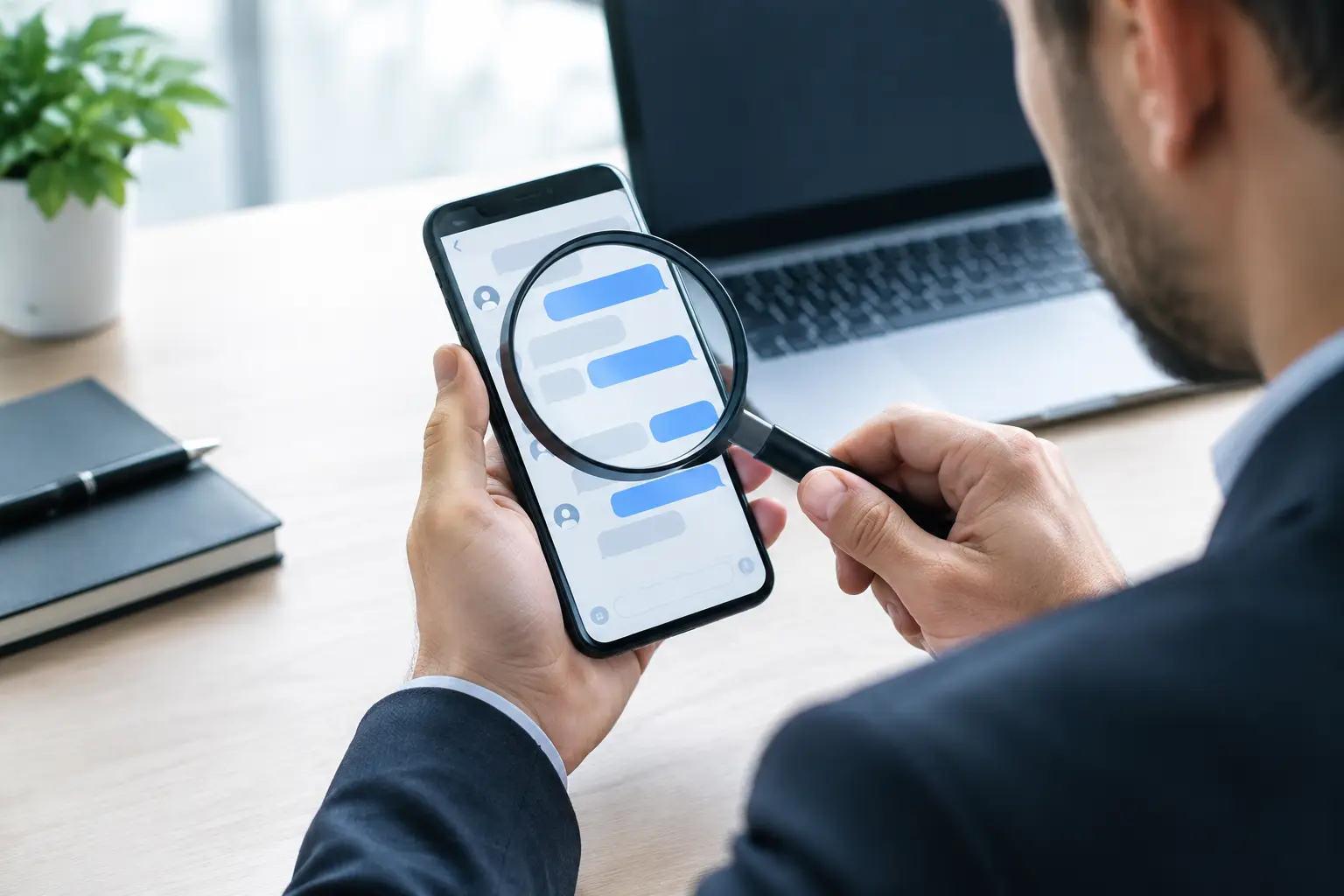
A deleted chat can feel like a closed door, particularly when it may contain proof of infidelity, employee misconduct, fraud, threats, or concealed business dealings. Can investigators recover deleted messages? In some cases, yes. But recovery is never guaranteed, and credible results depend on the device, the app, the time elapsed, available backups, and, above all, lawful access to the relevant data.
A professional investigation does not begin by promising that every deleted message will reappear. It begins by preserving what is available, identifying legitimate sources of evidence, and assessing whether the resulting material can be documented in a way that is useful for decision-making or legal proceedings.
Can Investigators Recover Deleted Messages From a Phone?
When a message is deleted, it may disappear from the screen without immediately disappearing from every possible source. A mobile device can retain fragments of data until that storage space is reused. The same conversation may also exist in a cloud backup, synchronized computer, notification record, recipient’s device, email archive, telecommunications record, or application database.
The practical answer depends on the facts. A recently deleted SMS message on a device that has not been heavily used may present more recovery opportunities than a message deleted months ago from an encrypted application with no accessible backup. New photos, app updates, operating-system changes, and ordinary daily use can overwrite remnants that might otherwise have been recoverable.
Forensic recovery is therefore a time-sensitive process. If a device may contain relevant evidence, avoid repeatedly unlocking it, installing recovery applications, resetting it, or attempting a do-it-yourself extraction. Those actions can alter data, overwrite recoverable material, and create questions about the integrity of the evidence.
What Digital Forensics May Actually Find
Digital forensic work is not limited to locating a complete deleted conversation. A properly conducted examination may identify supporting evidence that establishes who communicated, when activity occurred, what account or device was involved, and whether data was intentionally removed.
Potential sources include active chat histories, deleted-message artifacts, backups, synchronized accounts, contact records, call logs, media attachments, screenshots, notification data, browser history, location records, and file-system timestamps. On corporate matters, relevant information may also be found in company email, managed cloud storage, business messaging platforms, access logs, endpoint records, and approved device backups.
Context matters as much as the recovered text. A single screenshot without device information may be challenged as incomplete or manipulated. By contrast, a documented forensic process can connect a message to a particular device, account, date, and supporting activity. That distinction is often decisive when allegations must be assessed fairly.
Why Some Deleted Messages Cannot Be Recovered
There are real limits to recovery. Modern phones use strong encryption, and many messaging services are designed to minimize retained data. If a message was deleted, no backup exists, the relevant storage has been overwritten, and the service provider does not retain accessible content, there may be no technical route to obtain the message itself.
Applications that use end-to-end encryption can add another limitation. The provider may transmit messages without holding readable copies of their contents. This does not mean an investigation has reached a dead end. It means the focus may shift to the device, legitimate backups, recipients, related media, account activity, or other independently available records.
Remote deletion can also complicate matters. A sender may delete a message from a conversation, but earlier backups, notification previews, linked devices, or the recipient’s phone may still hold relevant traces. Each case must be evaluated individually, without assumptions and without speculative claims.
Lawful Access Is Non-Negotiable
The desire for answers does not permit unauthorized access to another person’s phone, personal email, cloud account, or private messaging account. Guessing passwords, installing spyware, intercepting communications, or accessing a device without proper authority can expose a client to legal risk and can undermine the value of any material obtained.
A lawful digital investigation typically proceeds where the client owns the device or account, has valid authority over a company-owned device, has the account holder’s informed consent, or obtains access through appropriate legal channels. For business clients, authority should be reviewed carefully. A company may have rights over managed devices and corporate accounts, but employee privacy expectations, workplace policies, local law, and the scope of the assignment still matter.
Licensed investigators work within those boundaries. Where a matter may proceed to court, counsel may advise on preservation, disclosure obligations, subpoenas, court orders, or other formal processes. A private investigator should not present unauthorized access as investigative skill. It is a compliance failure.
Preservation Comes Before Recovery
The strongest digital evidence is often the evidence that was protected before it was altered. If you believe messages may be relevant to a matrimonial dispute, internal fraud inquiry, harassment complaint, or commercial conflict, preserve the situation calmly and promptly.
Keep the original device secure and charged. Record basic details such as the device owner, make and model, phone number, relevant applications, dates of concern, and any visible account names. Preserve screenshots only as supplementary records, not as a replacement for the original device or source data. Do not forward private material widely, edit screenshots, or confront the suspected party through the account in question.
For an organization, place an appropriate hold on relevant company data before routine retention practices delete it. This may involve preserving email, device images, cloud folders, access logs, chat records, and CCTV where relevant. The scope should be controlled to the incident and managed confidentially to avoid unnecessary disruption or disclosure.
A Court-Conscious Forensic Process
Evidence is more useful when the process behind it can be explained. A disciplined digital forensic engagement commonly begins with an assessment of authority, objectives, devices, accounts, and risk. The examiner then uses appropriate methods to preserve the original data and create a working copy for analysis where possible.
Documentation should show what was received, when it was handled, who handled it, and what procedures were used. This chain of custody helps demonstrate that the material has not been substituted, altered, or casually contaminated. Findings should distinguish between confirmed facts, technical indicators, and reasonable inferences.
This approach protects both individuals and businesses. A client may learn that the evidence supports their concern, contradicts it, or remains inconclusive. All three outcomes can be valuable when they replace suspicion with documented facts.
When Recovered Messages Are Only Part of the Case
Deleted communications rarely tell the entire story. In a suspected infidelity matter, messages may need to be considered alongside lawful surveillance findings, travel patterns, financial records, or publicly available information. In a corporate investigation, they may be assessed alongside transaction records, access logs, interviews, inventory discrepancies, and policy breaches.
This wider view reduces the risk of drawing conclusions from a fragment of a conversation. It also helps identify whether a message was personal, operational, misleading, coerced, or taken out of context. The goal is not simply to retrieve data. The goal is to establish reliable, relevant facts.
When to Seek Professional Help
Seek advice early if the device or account may be altered, if an employee is about to leave, if a relationship dispute may lead to litigation, or if sensitive business information could be exposed. Early action creates more options for preservation and lawful evidence collection.
Baker Street Private Investigator approaches digital matters with discretion, documented procedures, and a case strategy tailored to the client’s legitimate objectives. A confidential assessment can clarify what evidence may exist, what authority is required, and whether forensic examination is proportionate to the issue.
The most useful next step is often not trying to force open a deleted conversation. It is securing the available evidence, protecting your legal position, and allowing a qualified professional to determine what the facts can genuinely support.