
10 September 2026
Forensic Imaging Versus Data Recovery Explained
Forensic imaging versus data recovery: learn which process preserves evidence, which retrieves files, and why the distinction matters in investigations.
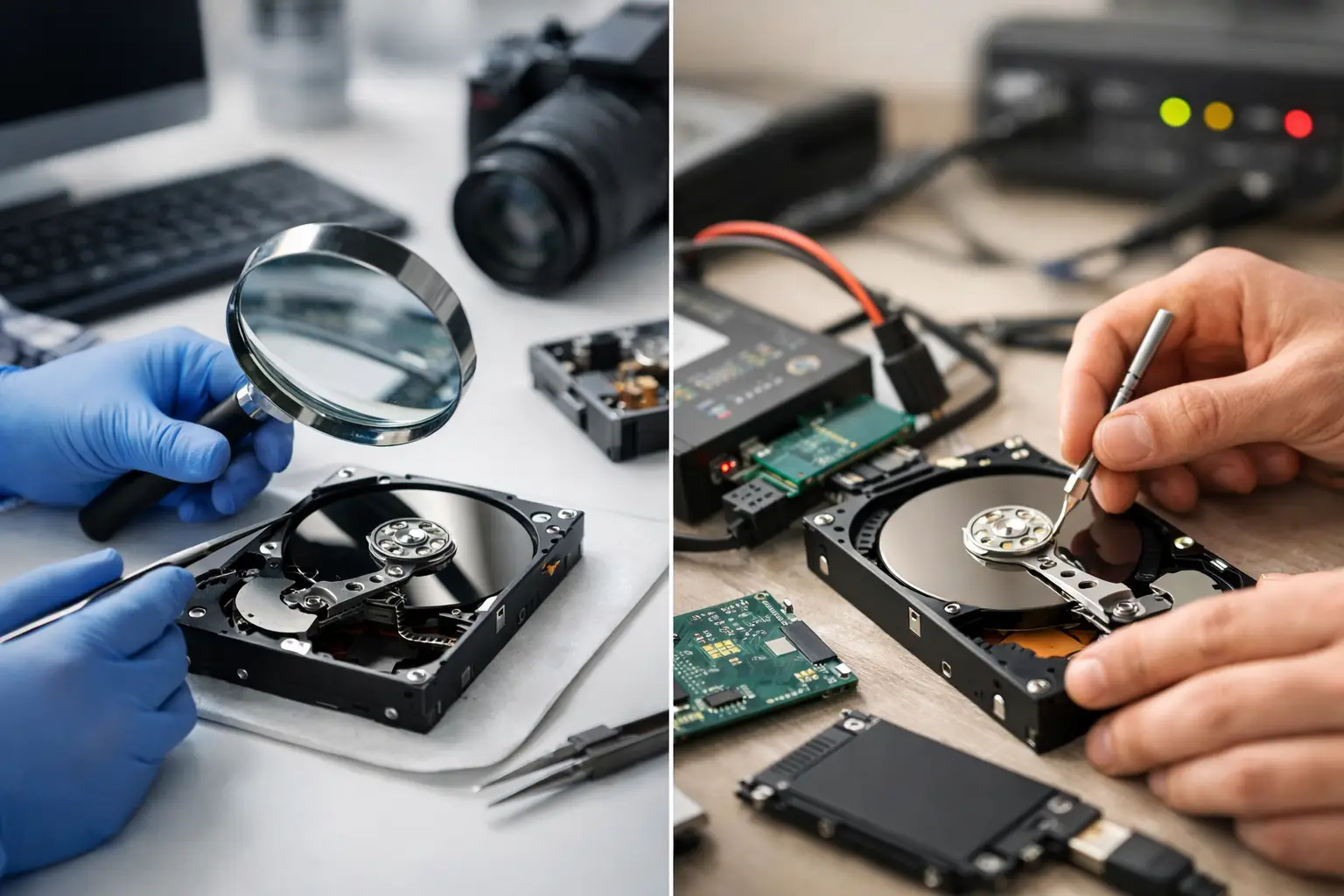
A deleted message, missing spreadsheet, or compromised laptop can create immediate pressure to “get the data back.” But forensic imaging versus data recovery is not a choice between two names for the same service. They serve different purposes, follow different procedures, and can lead to very different outcomes when a dispute, internal investigation, or legal proceeding is possible.
For private individuals and businesses, the distinction matters because data is often more than information. It may be evidence. How a device is handled from the first moment can affect what can be found, how confidently findings can be explained, and whether the material can support a decision or legal strategy.
What Is Forensic Imaging?
Forensic imaging is the controlled creation of a complete, verifiable copy of a digital storage device. Depending on the situation, this may include a computer hard drive, mobile phone, USB drive, memory card, server storage, or external drive.
A proper forensic image captures more than the files a user can see in folders. It can preserve file-system information, deleted data remnants, timestamps, system artifacts, user activity traces, and unallocated space where fragments of previously deleted information may remain. The original device is preserved while examination is performed on the forensic copy.
The core objective is evidence preservation. A trained examiner uses documented processes designed to avoid changing the source data. Verification values, commonly called hash values, are generated to demonstrate that the forensic image matches the original device at the point of collection. This provides a technical basis for showing that the examined copy has not been altered.
That discipline is especially valuable where allegations may be challenged. Examples include employee misconduct, theft of company information, fraud, unauthorized access, matrimonial disputes involving digital communications, or suspected manipulation of electronic records.
Why preservation comes first
Opening files, logging into an account, or running recovery software directly on a device can alter data. A computer may update logs when it starts. A phone may synchronize with cloud services. Recovery software may write new information to the same drive that contains deleted evidence.
Those changes do not always make the material useless. However, they can complicate the explanation of what occurred and when. Where the facts may later be disputed, a defensible process starts by securing and documenting the device before analysis begins.
What Is Data Recovery?
Data recovery is the process of retrieving inaccessible, deleted, corrupted, or lost files. Its goal is practical access to information, not necessarily complete evidential preservation.
A recovery specialist may restore documents after accidental deletion, recover photographs from a damaged memory card, retrieve business records from a failed hard drive, or extract files from a device affected by software corruption. In many routine cases, this is exactly what the client needs.
Recovery can range from a simple restoration from backup to advanced work involving damaged media. The available results depend on the device type, its condition, encryption, storage technology, and what has happened since the loss. If new data has been written over deleted material, successful recovery may be limited or impossible.
Data recovery can identify useful files quickly, but it does not automatically establish their full context, provenance, or integrity for investigative use. A recovered document may be valuable, yet questions can remain: Who created it? Was it edited? When was it transferred? Was it present on a particular device during the relevant period? Forensic analysis is often needed to answer those questions.
Forensic Imaging Versus Data Recovery: The Practical Difference
The most direct difference is purpose. Forensic imaging preserves the digital environment for examination. Data recovery retrieves lost or inaccessible information.
Forensic imaging is generally the stronger starting point when evidence may be needed for a workplace investigation, civil claim, criminal complaint, family dispute, or legal review. It creates a documented foundation from which an examiner can analyze both active and deleted artifacts while minimizing the risk of changing the original device.
Data recovery may be sufficient when the issue is operational rather than investigative. If a business needs a deleted presentation restored before a client meeting, or a family needs photographs recovered from a failed drive, full forensic acquisition may be unnecessary. The work can be faster and more cost-conscious when the objective is simply to regain access.
The two processes can also work together. A forensic image may be created first, followed by targeted recovery and analysis from the preserved copy. This approach is often appropriate where a client needs both the content of lost files and a reliable record of where those files were found.
When a Forensic Image Is the Better Choice
A forensic image should be considered when the device may contain material relevant to misconduct, liability, or a contested account of events. In these matters, speed is important, but careless handling can create avoidable risk.
For businesses, common triggers include suspected employee data theft, expense fraud, unauthorized disclosure of confidential information, policy breaches, altered records, harassment complaints, and possible sabotage. An organization may need to determine not only whether a file exists, but whether it was copied to external media, uploaded to a cloud service, emailed, renamed, deleted, or accessed by a particular user account.
For private clients, the need may arise where digital communications, financial records, location-related data, or online activity could affect a sensitive personal or legal matter. The device should not be searched casually if the information may later be relied upon. Preserving the source first gives the investigation a clearer, more accountable starting point.
A forensic image may also be appropriate after a cyber incident. Even if the immediate concern is restoring operations, preserved evidence can help clarify entry points, user activity, affected files, and whether data was removed or altered.
When Data Recovery May Be Enough
Data recovery is often the sensible route when there is no anticipated dispute and no need to reconstruct user activity. A small business that loses accounting files due to drive failure, for example, may prioritize retrieving records and resuming operations. A private client who accidentally deletes personal photos may simply want the files restored.
The decision changes if the loss appears intentional or suspicious. Suppose an employee claims a folder was accidentally deleted shortly before leaving the company. Or a party to a dispute produces only selected screenshots while the original device remains available. In either case, recovery alone may not address the wider evidential questions.
Clients should also understand that “recovered” does not always mean “complete.” A file may be partially restored, missing metadata, corrupted, or overwritten. A qualified examiner should explain what was obtained, what limitations remain, and how the result was produced.
Chain of Custody Is Not Administrative Detail
In sensitive matters, chain of custody is central to confidence in the evidence. It records who possessed the device, when it was received, how it was stored, what work was performed, and how the results were preserved.
This record helps protect both the client and the investigation. If opposing counsel, management, an insurer, or another party questions whether a device was tampered with, a clear chain of custody helps demonstrate controlled handling.
The same principle applies to reports. A useful digital forensic report should distinguish observed facts from interpretation. It should identify the source examined, describe the method used, record relevant dates and times with appropriate caution, and explain any technical limitations. Screenshots alone are rarely the full answer because they can lack context and are easier to challenge than documented extraction and analysis.
Avoid These Early Mistakes
The period immediately after suspected data loss or misconduct can determine what evidence remains available. Avoid repeatedly restarting the device, installing recovery tools onto the affected drive, allowing a potentially relevant employee unrestricted access, or sharing the device among multiple people.
Do not assume cloud data is safe simply because it is online. Synchronization can propagate deletions and changes across devices. Likewise, do not rely on a single exported chat, email, or screenshot when the underlying device or account may hold broader context.
Instead, limit unnecessary access, document what prompted concern, preserve relevant devices and credentials lawfully, and obtain professional advice before conducting intrusive searches. Businesses should also act within their employment policies, access controls, contractual rights, and applicable privacy obligations.
Choosing the Right First Step
The key question is not whether forensic imaging or data recovery is “better.” Ask what you need the information to do.
If you need lost files back for normal use, data recovery may be the right tool. If you need to establish what happened, identify user activity, preserve deleted artifacts, or prepare material that may be scrutinized, forensic imaging is usually the more defensible first step.
At Baker Street Private Investigator, digital matters are approached with the same discipline applied to any sensitive investigation: preserve what matters, document the process, and focus on findings that support an informed next decision. When the stakes are personal, commercial, or legal, the safest time to protect digital evidence is before someone tries to “fix” the device.