
16 September 2026
A Guide to Mobile Forensics and Digital Evidence
A guide to mobile forensics for sensitive cases: learn how phone evidence is preserved, analyzed, and documented for defensible decisions in Singapore.
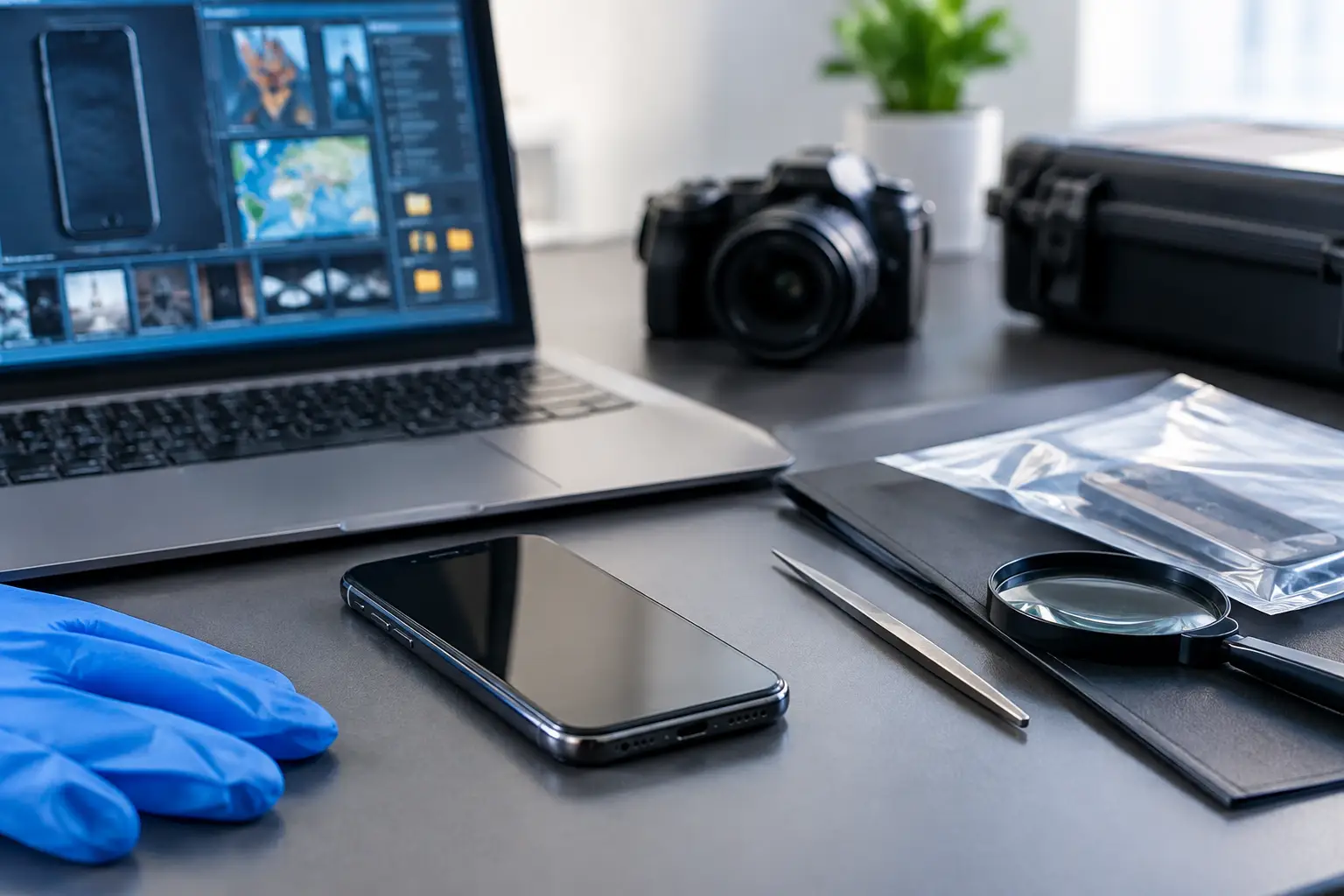
A phone can contain the clearest record of what happened – or a misleading fragment stripped of context. This guide to mobile forensics explains how professionals handle mobile-device evidence in sensitive personal and corporate matters without compromising confidentiality, legality, or evidential value.
What Mobile Forensics Is Designed to Establish
Mobile forensics is the disciplined collection, preservation, examination, and reporting of data from smartphones, tablets, SIM cards, memory cards, and related cloud-linked artifacts. The objective is not simply to find messages or photos. It is to establish reliable facts: what data exists, when it was created or changed, how it relates to the matter being investigated, and whether it can be responsibly relied upon.
For a private client, this may involve verifying communications relevant to a matrimonial dispute, locating evidence of concealed financial activity, or documenting digital conduct that affects a child custody concern. For an organization, the focus may be employee misconduct, theft of confidential information, fraud, policy violations, or a suspected data breach.
A professionally handled examination distinguishes evidence from assumption. A screenshot of a chat may be useful, but it rarely tells the entire story. It may omit earlier messages, contact identifiers, timestamps, edits, or signs that content was forwarded. A forensic review seeks the wider context while preserving a clear record of how the information was obtained.
Why Phone Evidence Requires Careful Handling
Mobile devices are active, complex systems. Incoming messages, application refreshes, location updates, remote-wipe functions, and routine user activity can alter information after a device is accessed. Even connecting a phone to an unfamiliar computer or repeatedly entering the wrong passcode can create avoidable risk.
The first priority is preservation. Investigators document the condition of the device, its visible state, relevant accessories, and the circumstances in which it was provided. They then use an appropriate acquisition approach based on the device model, operating system, security settings, and legal authority available.
Not every device can or should be examined in the same way. A modern encrypted phone may require a targeted review of data voluntarily provided by the lawful owner. In other circumstances, a device may be preserved pending legal advice or formal process. Attempting to bypass protections without authority can expose a client to legal, privacy, and evidential problems.
The Difference Between Access and Authority
Knowing a passcode is not necessarily permission to examine a device. Likewise, shared ownership of a family account does not automatically authorize access to another person’s private communications. In workplace investigations, company-issued devices and accounts may be subject to organizational policies, but those policies must still be assessed alongside applicable privacy obligations and the scope of the investigation.
This is where an experienced, licensed investigator adds value. The right question is not only, “Can this data be retrieved?” It is also, “Can it be collected lawfully, proportionately, and in a form that supports the decision ahead?”
The Mobile Forensics Process
A sound investigation follows a controlled process. The precise steps vary by case, but the discipline remains consistent.
1. Define the investigative question
An effective examination begins with a defined purpose. A broad request to “check everything” can increase cost, delay findings, and create unnecessary privacy exposure. A focused scope may address a specific time period, named contacts, suspected file transfers, location activity, deleted communications, or use of a particular application.
For corporate matters, the scope should also identify relevant custodians, devices, business systems, and internal policies. For private matters, it should account for the sensitivity of the relationship, the intended use of findings, and any pending legal proceedings.
2. Preserve the device and record its handling
Evidence must be traceable from the moment it is received. Investigators maintain a chain of custody that records who handled the device, when it was transferred, what action was taken, and where it was stored. This protects the integrity of the material and helps show that the information was not altered, substituted, or mishandled.
Depending on the circumstances, preservation may include isolating a device from network activity, creating a forensic copy where feasible, or securely documenting user-provided exports. The most suitable approach depends on the device and the authority available. A rushed extraction is not always the best extraction.
3. Acquire relevant data using validated methods
Forensic acquisition can range from a logical collection of accessible user data to a more comprehensive extraction of device artifacts. The method selected should be proportionate to the case and technically appropriate for the device.
Relevant material may include call records, text and app messages, photos, videos, documents, browser activity, email, contact data, calendar entries, location-related artifacts, and information showing file sharing or account use. Deleted data may sometimes be recoverable, but recoverability depends on the phone’s model, encryption, storage activity, and time elapsed. It should never be promised as a certainty.
Cloud-synchronized data requires particular care. Information stored in an account may not be present on the handset, while data visible on the handset may originate from a separate service. Accessing cloud content must be supported by proper authorization or legal process.
4. Analyze the evidence in context
Data alone does not establish intent. A location point may show where a device was recorded, not necessarily who carried it. A message may reflect a joke, a draft, an impersonation attempt, or a genuine instruction. File metadata can be informative, but it must be assessed alongside the source, time zone, device settings, and other corroborating records.
Investigators compare artifacts across sources where appropriate. For example, a message thread may be considered with call activity, image timestamps, shared-file records, access logs, or independently obtained surveillance findings. This helps identify consistency, gaps, and alternative explanations.
5. Produce a clear, defensible report
A useful forensic report does not overwhelm the reader with technical jargon. It explains the scope, the materials examined, the methods used, the limitations encountered, and the findings relevant to the investigative question. It also separates verified observations from professional interpretation.
If a matter may proceed to legal action, reporting must be especially precise. Records should be organized so that legal counsel, management, or the client can understand what the evidence shows and how it was handled. Court-conscious documentation can make the difference between a concerning allegation and a fact-based position.
Common Misunderstandings About Mobile Evidence
One common misconception is that deleted content is always recoverable. Modern phones are designed to protect user data, and encryption can make recovery impossible once information has been overwritten or cryptographically erased. Acting early may improve preservation options, but outcomes depend on the device and circumstances.
Another misconception is that screenshots are sufficient proof. Screenshots can support an inquiry, particularly when accompanied by clear details about source and timing. However, they are easier to edit, easier to take out of context, and harder to verify than properly preserved source material.
Clients also sometimes assume a forensic examination will reveal every action taken on a phone. It will not. Applications differ in how they store data, cloud services may retain or delete information under separate rules, and operating-system updates can change what is accessible. A credible investigator explains these limits rather than overstating what technology can deliver.
Choosing the Right Approach for Sensitive Cases
The right level of forensic work depends on what is at stake. A business responding to suspected theft of trade secrets may need rapid preservation, targeted review, and coordination with internal legal or HR teams. A private client considering family-law options may need a discreet assessment of material already lawfully available before deciding whether further action is appropriate.
Confidentiality should apply throughout the engagement, from the first consultation to secure handling of reports and supporting media. Clients should expect clear communication about scope, costs, expected timeframes, and the limits imposed by privacy and access laws.
At Baker Street Private Investigator, mobile forensic work is approached as part of a wider evidence strategy, not as a shortcut to conclusions. Licensed, discreet handling and properly documented findings help clients make informed decisions while reducing the risk of avoidable legal or reputational harm.
When a phone may hold material facts, preserve what you can lawfully preserve, avoid unnecessary access, and obtain professional guidance before critical data is lost or its reliability is called into question.