
4 September 2026
Identity Verification Methods That Reduce Risk
Compare identity verification methods for hiring, vendor checks, fraud concerns, and cases while protecting privacy and building clear defensible records.
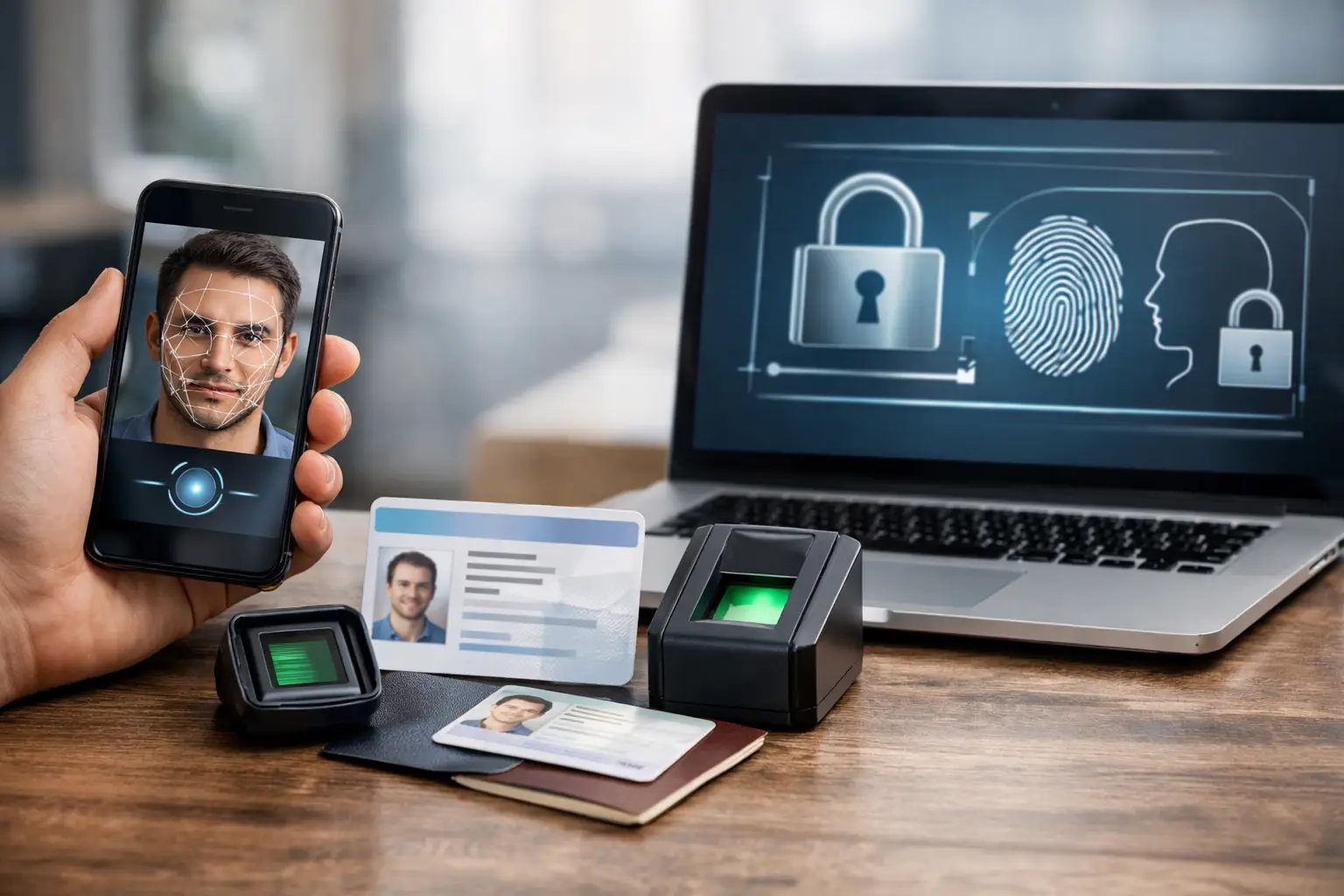
A name, an email address, and a scanned ID can create a convincing first impression. They do not, by themselves, establish who a person is, whether the document is genuine, or whether the person is connected to the business, address, or claim being presented. Effective identity verification methods are designed to close that gap before a hiring decision, financial transaction, relationship commitment, or investigation proceeds.
For private individuals and businesses, the objective is not to collect the maximum amount of personal data. It is to obtain reliable, relevant confirmation that matches the level of risk. A landlord screening a tenant, an employer onboarding a senior finance hire, and a company examining a suspected fraud incident should not use the same process. The facts required, consent obligations, and consequences of error are different.
Why identity proof often fails
Identity fraud is rarely limited to a completely fictitious person. More often, it involves a real identity used without authorization, altered records, a misleading employment history, or carefully selected information that conceals a conflict of interest. A document may be genuine while the person presenting it is not its rightful holder. A reference may be real while the referee is a friend rather than a former supervisor.
This is why a single check can be misleading. A copied driver’s license confirms very little if it is not examined for authenticity and matched to the individual. Likewise, an online profile can support a lead, but it should not be treated as proof of identity, residence, employment, or character.
A sound process uses independent points of confirmation. It also records what was checked, when it was checked, how the information was obtained, and any discrepancy identified. That discipline matters when a decision is challenged later by a court, regulator, insurer, employee, or family member.
Identity verification methods and what they establish
Each method answers a different question. The strongest approach combines methods that address document authenticity, possession, personal presence, and real-world connections.
Government-issued document review
Passports, national identity cards, driver’s licenses, and work authorization documents are common starting points. A proper review considers whether the document appears altered, expired, inconsistent with known details, or incompatible with the issuing authority’s format.
Document review alone has limits. High-quality counterfeits and genuine stolen documents exist. For higher-risk decisions, the reviewer should compare the document to other independently obtained records and, where appropriate, verify details through authorized official or commercial channels.
Biometric and liveness checks
A biometric comparison can match a live image or video capture to a photo on an identity document. Liveness testing is intended to determine whether a real person is present rather than a photograph, recording, or manipulated image.
This can be useful for remote onboarding and account recovery, particularly where impersonation is a concern. However, biometric data is highly sensitive. Organizations should use it only where justified, obtain appropriate consent, secure the data carefully, and avoid retaining it longer than necessary. Biometric matching can also produce errors, so it should not be the sole basis for an adverse decision.
Database and record verification
Authorized checks against reliable records can confirm whether specific information aligns with available sources. Depending on the jurisdiction and purpose, this may include address history, professional licensing, company directorships, employment records, or sanctions and watchlist screening.
The value lies in corroboration. If a candidate claims to have held a regulated role, an applicable licensing record may confirm or contradict that claim. If a vendor represents itself as an established company, registration details, director information, and operating history may reveal whether the stated profile is credible.
Record searches must be conducted lawfully and for a defined purpose. Accessing restricted information without authority, using inaccurate databases, or treating a search result as final proof can create serious legal and reputational exposure.
Knowledge and account-based checks
Verification may involve confirming control of a phone number, email account, bank account, or another established channel. Knowledge-based questions can also be used, although they are less dependable when answers can be found through data breaches, social media, or public records.
These checks are best used as supporting evidence. Control of an email address does not prove the legal identity of the account holder. It simply confirms access to that channel at a particular time.
Address, employment, and relationship corroboration
For sensitive personal or commercial matters, real-world verification is often more revealing than a digital identity check. Confirming a claimed address, employment position, business relationship, or pattern of activity may expose inconsistencies that documents do not show.
This work requires particular care. Observation, interviews, and record gathering must be lawful, proportionate, and conducted with respect for privacy. A licensed investigator can help establish facts without crossing boundaries that could compromise the evidence or expose the client to unnecessary risk.
Match the method to the decision
The question is not simply, “How do we verify this person?” A more useful question is, “What decision are we about to make, and what would a mistaken identity cost us?”
For standard employment onboarding, a company may need to confirm legal work eligibility, credentials, and employment history. For a senior executive with access to finances, trade information, or customer data, additional background checks and conflict-of-interest inquiries may be justified. The process should be consistent with the role and applied fairly.
For vendor onboarding, businesses should verify both the individual representatives and the entity itself. Fraud frequently arises when payment instructions change unexpectedly, a supplier’s email domain is imitated, or a supposed company representative is not authorized to act. Confirming the organization’s legal existence, authorized signatories, contact channels, and bank details through independent communication can prevent costly losses.
For private matters, such as pre-marriage concerns, hidden assets, custody disputes, or locating a missing person, the standard should be factual relevance rather than suspicion. The aim is to clarify a specific issue with evidence that can withstand scrutiny, not to intrude on another person’s life without cause.
A defensible verification workflow
A reliable process is deliberate rather than improvised. It generally follows five stages:
- Define the purpose and level of risk. Identify the decision being made, the facts that need confirmation, and the legal basis for collecting information.
- Obtain consent or confirm lawful authority. Be transparent where required, especially for employment screening, personal data collection, and biometric processing.
- Gather evidence from independent sources. Compare identity documents, direct confirmations, official records, and verified contact channels rather than relying on a single submission.
- Investigate discrepancies proportionately. A misspelled name may be an administrative error. Conflicting work history, false qualifications, or unexplained payment changes require closer examination.
- Preserve a clear record. Keep dated notes, source details, copies obtained lawfully, communications, and findings. Distinguish verified facts from allegations or reasonable inferences.
This workflow protects more than the organization. It also protects the person being checked from unfair conclusions based on incomplete or incorrect information.
Privacy, consent, and evidence handling
Identity verification has to balance risk management with privacy. Collect only information that is relevant to the purpose, restrict access to personnel with a genuine need to know, and protect records from unauthorized disclosure. Sensitive materials should not be circulated through informal chat groups or stored indefinitely in unsecured folders.
For matters connected to Singapore, personal data obligations and investigative conduct must be considered alongside the circumstances of the case. Employers, businesses, and private clients should avoid assuming that public availability makes information free to use for any purpose. Privacy rules, contractual duties, employment law, and admissibility concerns can all affect what may be collected and how it should be handled.
Evidence is strongest when its origin is clear. Screenshots without dates, anonymous allegations, edited recordings, and secondhand claims can be useful leads, but they are not automatically reliable proof. Where legal action, disciplinary proceedings, or insurance disputes may follow, the collection process should be planned with evidentiary integrity in mind.
When a professional investigation is appropriate
A professional investigation may be warranted when identity concerns are connected to suspected deception, internal misconduct, false claims, undisclosed relationships, asset concealment, or a missing person matter. It is especially valuable when direct confrontation could alert the subject, compromise evidence, or escalate a personal dispute.
Licensed investigators work from a defined scope, using lawful methods and documented procedures. They should be clear about what can realistically be established, what remains uncertain, and what evidence may support further legal or operational action. No responsible investigator should promise a predetermined result.
Baker Street Private Investigator approaches identity-related inquiries with the same discipline applied to corporate, matrimonial, and legal investigations: establish the relevant facts, protect confidentiality, and provide findings that support an informed next step. When the stakes are personal or commercial, the right verification process does not merely answer who someone claims to be. It gives you a reliable basis for deciding what to do next.