
Digital Forensics Singapore for Real Cases
Digital forensics Singapore services help secure evidence from phones, laptops, email, and cloud accounts for personal, corporate, and legal matters.
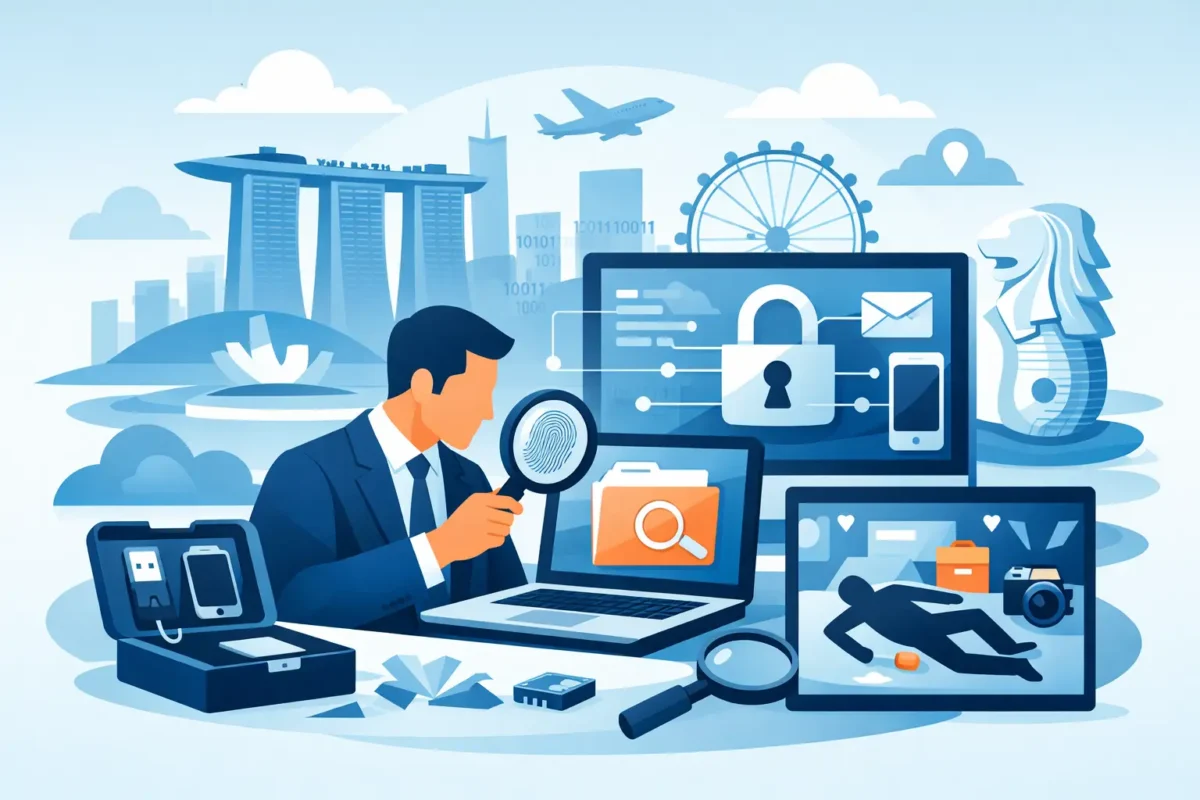
A deleted message thread. A wiped company laptop. A staff member sending files to a personal drive before resigning. These are not technical inconveniences – they are evidence problems. In digital forensics Singapore matters, the difference between suspicion and proof often comes down to how data is preserved, extracted, and documented from the start.
For individuals, that may mean confirming hidden communications, tracing financial activity, or preserving digital evidence for family or civil proceedings. For businesses, it often means investigating fraud, data theft, policy breaches, sabotage, or misconduct without compromising the integrity of the evidence. In both situations, speed matters, but so does discipline. If devices are handled casually, critical data can be altered, overwritten, or challenged later.
What digital forensics in Singapore actually covers
Digital forensics is the structured examination of electronic devices and data to identify, preserve, analyze, and report evidence. The work may involve smartphones, computers, tablets, removable drives, email systems, messaging platforms, cloud storage, GPS data, and application logs. The objective is not simply to find information. It is to recover and present facts in a way that is clear, defensible, and useful for decision-making.
In practical terms, that can include recovering deleted files, reconstructing timelines, identifying file transfers, reviewing login activity, examining chat records, and tracing where data went and when. In some cases, the evidence is obvious. In others, the real value lies in correlation – matching device activity with dates, locations, user behavior, and other investigative findings.
That distinction matters because a screenshot alone rarely tells the full story. A proper forensic review can show whether a message was sent from a specific device, whether files were copied to external media, whether an account was accessed at unusual hours, or whether data was intentionally removed. Those details can materially affect personal decisions, internal disciplinary action, insurance matters, and legal strategy.
When digital forensics Singapore services are needed
Most clients do not approach a forensic investigator because of a general interest in technology. They do so because something has already gone wrong, or they believe it has.
For private clients, common triggers include suspected infidelity, hidden digital communications, custody-related concerns, harassment, stalking, and disputes involving digital records. A spouse may suspect encrypted messaging or alternate accounts. A family may need to preserve device evidence before it is erased. A claimant may need to verify whether communications, photos, or location records support or contradict a version of events.
For corporate clients, the warning signs are different but equally serious. A business may discover unusual downloads before an employee leaves, missing customer data, unauthorized access to email, manipulation of records, or misuse of company devices. HR and management may need to investigate wrongdoing while maintaining confidentiality and limiting operational disruption. Legal teams may need evidence collected with a clear chain of custody rather than an improvised internal review.
Not every concern justifies a full forensic engagement. Sometimes the right step is limited preservation first, followed by a scoped analysis. That depends on the risk, the available devices, who controls access, and whether legal proceedings are likely.
Why evidence handling matters more than most people realize
Digital evidence is fragile. Opening a phone, connecting a laptop to a network, attempting a do-it-yourself recovery, or letting an internal staff member browse through a device can change timestamps, overwrite deleted material, or raise later questions about contamination.
That is why method matters. A proper forensic process aims to preserve original data, document each step, and work from forensic copies where appropriate. The goal is not only to discover what happened but to show how that conclusion was reached. If findings may later be reviewed by counsel, management, insurers, or the court, credibility depends on process as much as outcome.
This is one reason licensed, discreet investigators remain relevant even when many software tools are commercially available. Tools can extract data. They do not replace judgment, lawful handling, investigative context, or reporting that anticipates scrutiny.
How a digital forensics investigation usually works
A well-run matter starts with scope. The investigator needs to understand the concern, the devices involved, who owns them, who has access, and what decision the client needs to make. That sounds basic, but it shapes everything that follows. A matrimonial matter is approached differently from an employee misconduct case. A device owned by the company presents different options than one owned personally by an employee.
The next stage is preservation. If relevant devices, accounts, or storage media are still accessible, the priority is to secure them before evidence changes. That may involve imaging a laptop, preserving emails, capturing logs, or isolating a phone from further use. Delay can reduce what is recoverable.
Analysis comes after preservation, not before. Investigators review relevant artifacts, reconstruct activity, and test whether the digital record supports or contradicts the allegation. In a business setting, the task may be to determine whether sensitive files were accessed, copied, sent externally, or deleted. In a personal matter, it may be to confirm communications, identify patterns, or establish timelines.
Reporting is where technical findings become usable. A client does not need pages of jargon with no operational value. They need a clear explanation of what was found, what it means, what remains uncertain, and what next steps are realistic. If the matter proceeds further, documentation should support follow-up action rather than create new ambiguity.
Common misconceptions about digital evidence
One of the biggest misconceptions is that deleted means gone. In reality, some deleted data can be recovered, but not always, and not indefinitely. Recovery depends on the device, the operating system, encryption, elapsed time, and what happened after deletion. If a phone has been heavily used since the data was removed, the window may narrow quickly.
Another misconception is that access alone solves the problem. A spouse may have a password. An employer may own the laptop. That does not automatically mean any review method is acceptable or strategically wise. Evidence still needs to be collected in a controlled way, especially if the findings may later be challenged.
There is also a tendency to overestimate what forensics can prove. Digital evidence is powerful, but not magical. It can often show device activity, account access, timestamps, transfers, locations, and communications. It may not always identify motive or explain every inconsistency. Good investigative work separates what is established from what is inferred.
Choosing the right provider for digital forensics Singapore matters
The right provider is not simply the one with the longest list of technical terms. Sensitive cases require licensed handling, confidentiality, and an evidence-led mindset. Clients should look for an investigative team that understands personal and commercial risk, not just device extraction.
That includes practical judgment about scope and legality, disciplined documentation, and reporting that can stand up to review. It also means understanding when digital findings need to be combined with surveillance, background investigation, witness development, or corporate fact-finding. In many real cases, the truth does not sit in one device alone.
For that reason, many clients prefer a licensed agency that approaches digital evidence as part of a broader investigative strategy. Baker Street Private Investigator handles these matters with a discreet, case-specific process built around evidence preservation, confidentiality, and decision-ready reporting.
What clients should do before engaging a forensic investigator
If you suspect relevant evidence exists, avoid experimenting with the device or account. Do not install monitoring tools, run recovery software, forward large amounts of data to yourself, or allow multiple people to inspect the material. Well-meant actions can damage the record or complicate later review.
Instead, preserve what you can without altering the source. Note the device type, account details you lawfully control, key dates, relevant names, and why the issue matters. If this is a company matter, identify ownership of the device and whether access rights are clear. If this is a personal matter, be ready to explain the context and what outcome you need, whether that is clarity, internal action, or preparation for legal advice.
Digital evidence can clarify what happened, but only if it is handled correctly from the outset. When the issue involves your family, your business, or your legal position, careful forensic work gives you something more useful than suspicion – it gives you facts you can act on.