
Work Injury Claim Investigation Singapore
Work injury claim investigation Singapore services help employers verify facts, document evidence, and protect legitimate claims with discreet support.
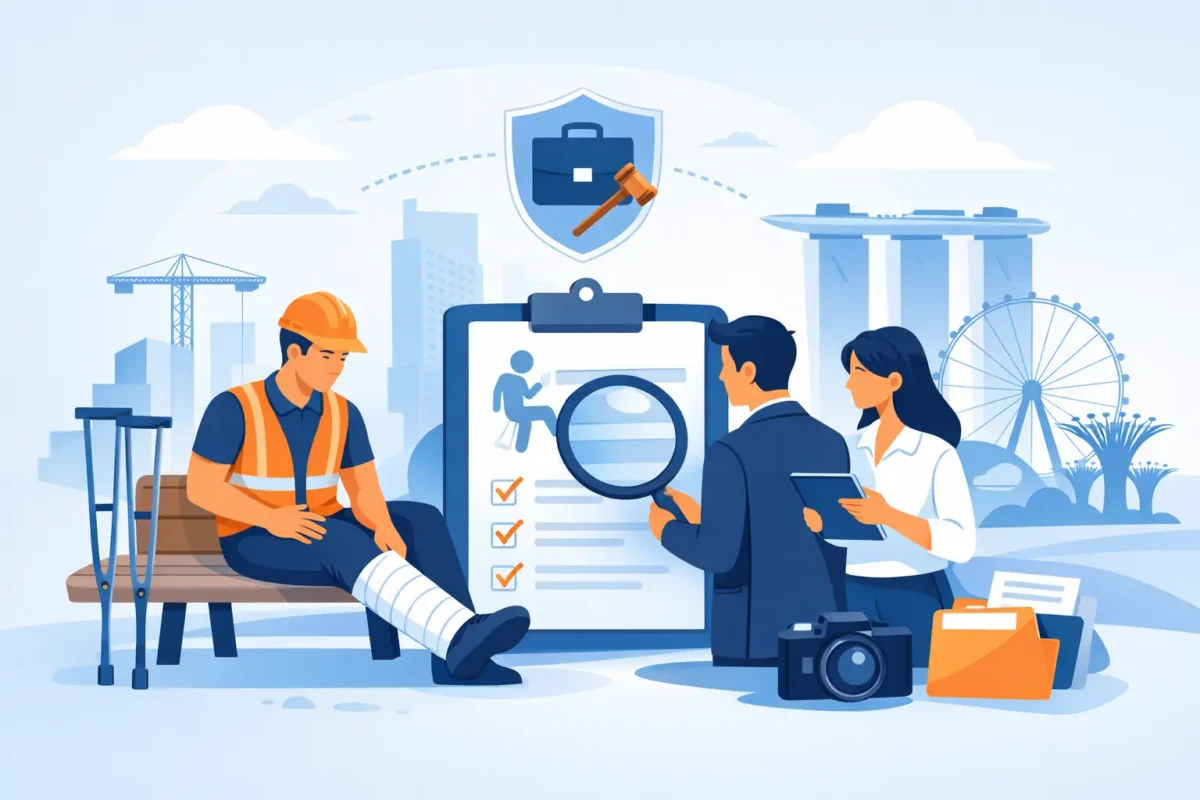
A work injury claim investigation Singapore employers request usually starts after the paperwork raises more questions than answers. The injury may be real, but the timeline feels inconsistent. A witness account may conflict with attendance records. An employee may report limited mobility while social activity suggests otherwise. In these situations, assumptions are risky. What matters is a factual, discreet, and legally conscious investigation that helps clarify what actually happened.
Why a work injury claim investigation in Singapore matters
Work injury claims deserve careful handling because the stakes are high on both sides. For employees, a valid claim may affect medical treatment, wage replacement, and long-term financial stability. For employers, insurers, and legal teams, an inaccurate or exaggerated claim can lead to unnecessary costs, operational disruption, and prolonged disputes.
That is why a proper work injury claim investigation in Singapore is not about trying to discredit every injured worker. It is about separating legitimate claims from questionable ones through evidence. A disciplined investigation protects fairness. It can support a genuine claimant when the facts are clear, and it can expose inconsistencies when the facts do not align.
In practice, these cases often sit in a gray area. Some employees are injured but overstate the extent of their incapacity. Others may have a pre-existing condition that complicates the claim. Some cases involve poor reporting rather than fraud. A professional investigator approaches each matter without bias and focuses on what can be verified.
What usually triggers an investigation
Not every workplace injury needs outside investigative support. Many claims are straightforward, documented promptly, and supported by medical records and witness statements. An investigation becomes more relevant when there are gaps, contradictions, or signs of misrepresentation.
Employers often seek help when an incident was reported late, when no one witnessed the event despite it allegedly happening in a populated worksite, or when the stated injury appears inconsistent with job records or subsequent activity. HR and legal teams may also act when repeated claims emerge from the same pattern of conduct, or when an employee on medical leave appears to be working elsewhere or engaging in strenuous activity.
None of these factors prove fraud on their own. They simply justify closer examination. That distinction matters. A poorly handled response can create employment, reputational, and legal complications. A controlled investigation preserves objectivity.
What a professional investigation typically covers
A credible work injury claim investigation Singapore businesses rely on is built around documentation, field intelligence, and legal awareness. The scope depends on the claim, but most cases involve reviewing the reported timeline, checking internal records, identifying discrepancies, and collecting evidence that can withstand scrutiny.
Incident timeline verification
The first issue is often timing. Investigators examine when the injury was said to occur, when it was reported, who was present, and what records support that version of events. Clock-in logs, duty rosters, internal messages, access records, and location-based details can all help establish whether the timeline is coherent.
Witness and background fact-checking
Witness statements are useful, but they are not always complete or consistent. In some cases, a co-worker may have heard about the incident secondhand. In others, supervisors may not have been informed until much later. Investigators look for factual alignment rather than broad impressions.
Background checks may also become relevant in limited situations, especially where there are concerns about prior conduct, side employment, or repeated claims behavior. The point is not intrusion for its own sake. It is to understand whether there is a material fact affecting the claim.
Surveillance and activity checks
Surveillance is one of the most sensitive parts of a work injury matter, which is why it must be handled discreetly and lawfully. If a claimant reports severe physical restriction but is later observed performing inconsistent activities, that evidence may be significant. It may affect the extent of incapacity, the duration of the claim, or the credibility of the overall account.
That said, surveillance has limits. A short observation window does not always tell the whole story. A person with a real injury may still have moments of mobility. This is why experienced investigators avoid sensational conclusions and document patterns carefully.
Evidence reporting for legal and internal use
The final output matters as much as the fieldwork. Notes, photographs, video records, chronology, and factual findings need to be organized in a way that supports internal review, insurer assessment, or legal consultation. Evidence that is poorly collected or carelessly reported may be less useful later.
The balance between skepticism and fairness
Work injury cases are rarely improved by an aggressive posture. Employers may feel exposed to abuse of the system, especially when claims affect staffing, insurance costs, and morale. At the same time, an injured worker should not be treated as dishonest simply because the claim is inconvenient or expensive.
The most effective investigations are disciplined, not emotional. They start with a clear objective, define what needs to be verified, and avoid unnecessary intrusion. This protects the employer from acting on suspicion alone and reduces the risk of mishandling a valid claim.
It also helps to recognize that inconsistency does not always equal deception. Confusion, language barriers, poor incident reporting, and medical complexity can all create gaps in the record. A strong investigator distinguishes between innocent inconsistency and evidence of deliberate misrepresentation.
Why employers and legal teams use licensed investigators
A work injury claim touches employment, privacy, compliance, and sometimes litigation. That is why businesses usually benefit from using a licensed private investigation agency rather than conducting informal checks internally.
An external investigator brings distance and structure. The work is handled more objectively, the evidence trail is cleaner, and the reporting is often better suited for legal review. There is also less risk of internal staff overstepping, compromising confidentiality, or unintentionally confronting the claimant in a way that escalates the matter.
For companies in Singapore, local regulatory awareness is not optional. Investigative work has to be conducted within lawful boundaries and with an understanding of what evidence is useful in a compensation or dispute context. Agencies such as Baker Street Private Investigator are engaged for exactly this reason – discreet handling, operational discipline, and findings prepared with legal sensitivity in mind.
What clients should prepare before starting
A more effective investigation usually begins with better inputs. Employers, insurers, or counsel should be ready to provide the original claim details, incident reports, medical leave information where appropriate, witness names, schedule records, and any internal concerns that prompted the review.
It also helps to be specific about the objective. Some clients want to verify whether the incident happened as described. Others are focused on whether the claimed incapacity matches the person’s observed activity. Sometimes the issue is side employment during medical leave. Defining the question early keeps the investigation proportionate and cost-effective.
Not every case requires a broad inquiry. In fact, narrow and targeted investigations are often stronger. They reduce noise, focus resources, and produce findings that are easier to act on.
When timing affects the outcome
Delay can weaken a case on either side. If evidence is sought too late, witnesses may forget details, records may become harder to reconcile, and surveillance opportunities may narrow. Early action does not mean rushed action. It means preserving the chance to verify facts while they are still available.
This is especially relevant when the claim includes changing accounts, disputed work capacity, or alleged incidents with limited direct witnesses. A prompt response gives decision-makers a clearer factual base before positions harden and disputes become more expensive.
What a good investigation actually delivers
A good investigation does not promise a dramatic reveal. It delivers clarity. Sometimes that means confirming the claim appears consistent and legitimate. Sometimes it means identifying material discrepancies that justify closer legal or insurance review. Either result is useful because it replaces speculation with documented fact.
For employers, that clarity supports fairer decision-making. For legal teams, it improves case preparation. For insurers, it sharpens claim assessment. And for any party dealing with a sensitive workplace dispute, it creates a more defensible record.
When a work injury claim feels uncertain, the right response is not guesswork or confrontation. It is a discreet, evidence-led investigation carried out with discipline, confidentiality, and respect for the facts. That approach protects legitimate claims, challenges questionable ones, and gives you something far more valuable than suspicion – a reliable basis for action.